
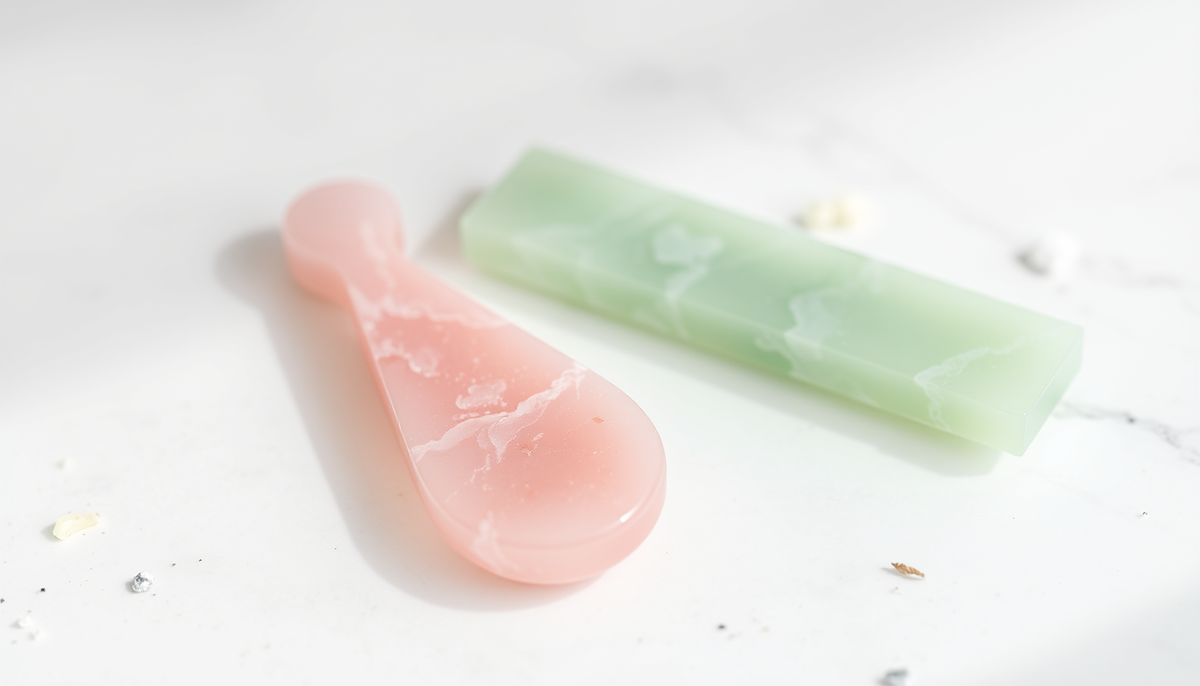
Gua sha has moved from a niche ritual to a practical daily routine for people seeking a refreshed, radiant complexion. This comprehensive guide dives into tool geometry, cadence, and facial lymphatic drainage, offering a practical side-by-side approach you can apply today to elevate your skincare ritual.
Tool Geometry: Shapes That Meet Different Areas of the Face
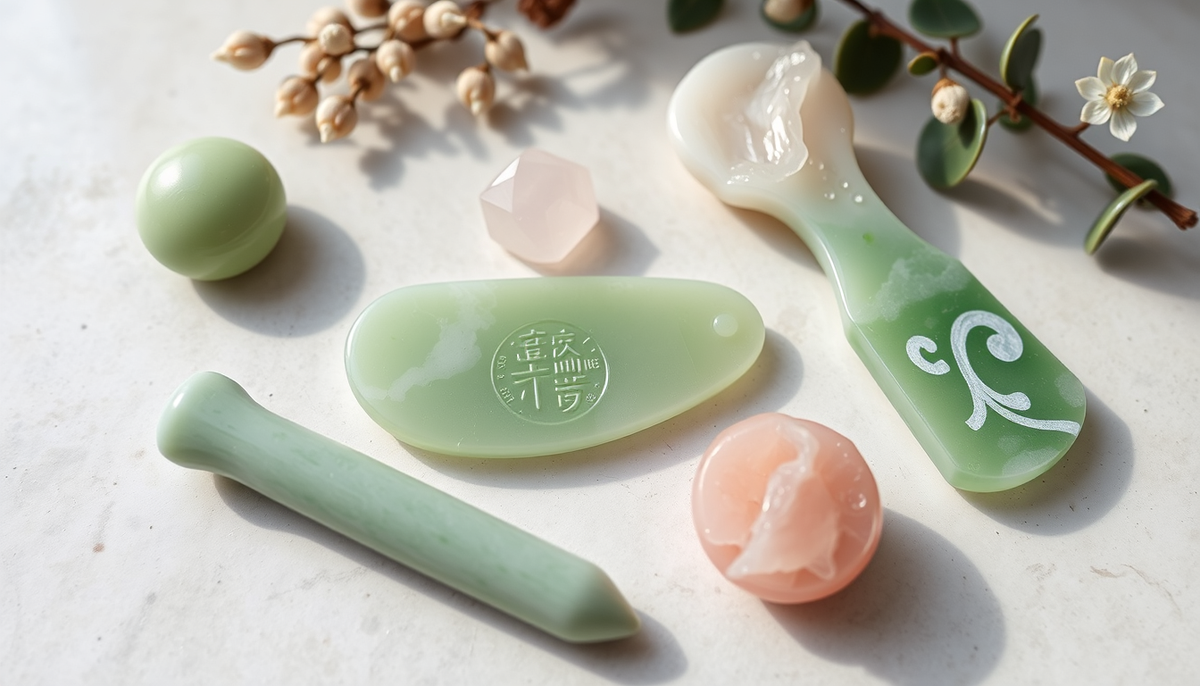
Choosing the right geometry matters as much as the pressure you apply. Each shape serves a purpose, helping you glide smoothly over contours while supporting drainage and stimulation of the skin.
- Flat edge — ideal for broad planes like the forehead and cheeks. It provides even contact and consistent drainage across wide surfaces.
- Curved edge — follows facial contours (cheekbone arc, jawline) for a snug glide that doesn’t skip over curves.
- Pointed tip — targets small zones and drainage paths (under the eyes, nasal folds) where precision matters.
- Rounded/spoon shapes — soften delicate zones around the lips and eyes while minimizing drag and irritation.
- Hollow or concave shapes — offer a gentle grip for multi-directional sweeps, often used on the cheek and temple to encourage lymph flow without pinching skin.
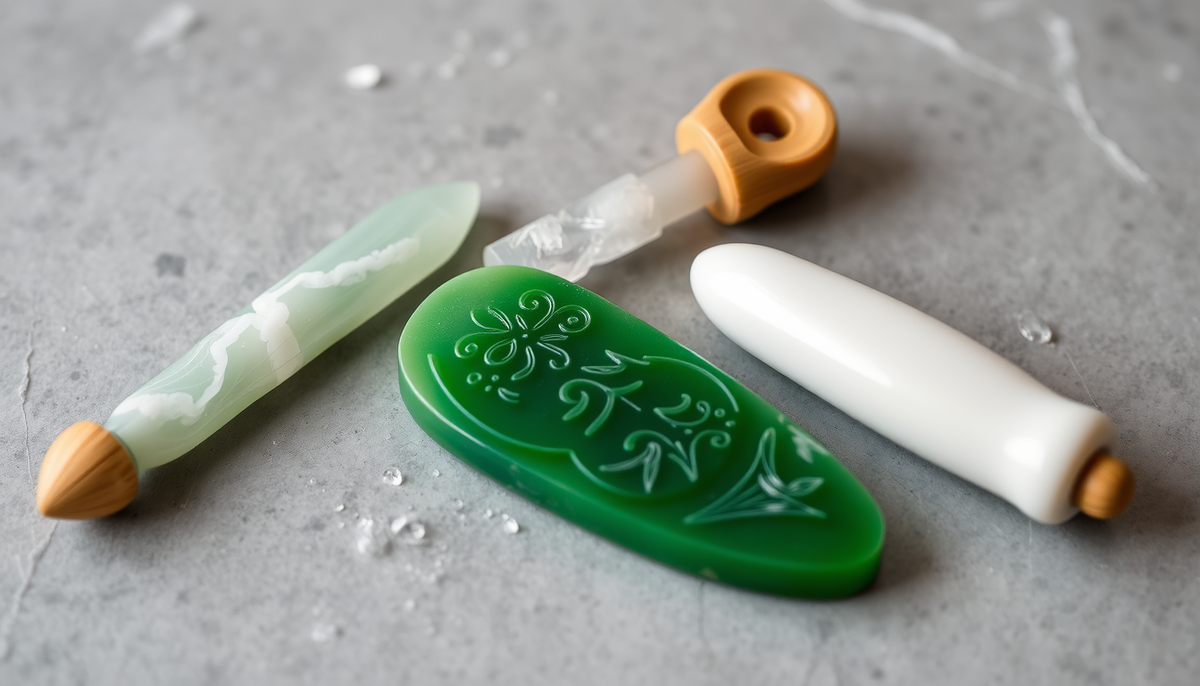
Materials influence glide and temperature—jade, rose quartz, or other stones each carry distinct tactile feels. The most important factor: pick a tool that feels balanced in your hand and comfortable to hold during your routine.
Cadence and Rhythm: How to Move the Tool Safely and Effectively
Set the stage with clean skin and a lubricant such as a few drops of facial oil or serum. Hold the tool at a shallow angle (15–30 degrees) and use slow, deliberate strokes that move upward and outward toward regional lymph nodes in the neck. A typical cadence is 2–4 seconds per stroke with 3–4 passes per area, totaling about 5–10 minutes for a full facial routine.
- Follow the grain of your face: forehead from center outward; cheeks from nose outward toward the temples; jawline from chin toward the ears.
- Increase pressure gradually for larger areas if your skin tolerates it; otherwise keep light to moderate pressure to avoid irritation.
- Keep the surface lubricated; avoid dragging dry skin and lift the tool away gently when changing directions.
Facial Lymphatic Drainage: The Science in Simple Steps
Lymphatic drainage helps move interstitial fluids toward lymph nodes, reducing puffiness and promoting a more toned appearance. For gua sha, the strokes should direct toward regional lymph nodes, typically along the sides of the face and down toward the neck lymph nodes near the collarbone.
- Common drainage paths: center of the face toward the sides, then down to the neck.
- Begin at the center of the forehead, then move to the temples, cheeks, jawline, and finish with a light sweep down the neck.
Side-by-Side: Tool Geometry, Cadence, and Expected Results
- Flat edge — broadened zones; cadence: even, steady strokes; results: smoother texture and generalized drainage on forehead and cheeks.
- Curved edge — contours; cadence: follow curves with gentle pressure; results: lifted, more defined cheek and jawline.
- Pointed tip — precision zones; cadence: short, controlled strokes; results: reduced under-eye puffiness and targeted decongestion.
- Rounded/spoon — delicate areas; cadence: slow, feather-light passes; results: refined lip and eye areas with minimized drag.
- Concave/hollow shapes — multi-directional glide zones; cadence: smooth, shallow sweeps; results: improved cheek fullness and freer lymph flow.
A Comprehensive 12-Minute Daily Routine
- Cleanse thoroughly and pat dry.
- Apply 2–4 drops of your favorite oil or serum to create a slippery surface.
- Forehead: flat edge, center to temples (6–8 strokes per side).
- Temples: gentle circles with the curved edge to relax tension (4–6 cycles).
- Cheeks: curved edge, sweep from the nose outward to the ears (6–8 strokes per side).
- Under-eye and mid-face: pointed tip, light pressure with short, precise strokes (5–6 strokes per zone).
- Jawline and neck: switch to flat or curved edge; sweep upward toward the ears and down to the collarbone (8–12 strokes per side).
- Finish with broad, light sweeps across the neck to encourage drainage.
If you’re short on time, you can compress this into a 5-minute version by shortening the sets and focusing on the nose-to-cheek and forehead zones first.
Tailoring Techniques: Skin Type, Age, and Concerns
Whether you have oily, dry, sensitive, or mature skin, you can adapt gua sha to support your unique needs. Try lighter pressure for sensitive or reactive skin, and slightly longer, shallower strokes for mature skin where the aim is to promote contour while avoiding irritation.
— focus on sweeping away surface oil and puffiness using flat and curved edges with steady, moderate pressure. - Dry or sensitive skin — prioritize glide and lubrication; avoid aggressive pressure and keep sessions brief if needed.
- Mature skin or loss of elasticity — emphasize lifting direction and smoother, less aggressive strokes; consider longer sessions but with extra lubrication.
Safety First: Contraindications and Best Practices
- Avoid broken skin, active infections, eczema flare-ups, or inflammation on the face. If unsure, consult a dermatologist.
- Never drag the tool downward on the neck toward the chest; instead, direct strokes toward the collarbone to support natural drainage.
- Patches tests are recommended for oils or serums to prevent irritation. Clean the tool after each use.
- Keep tools clean and dry; sanitize periodically to prevent bacteria buildup.
Maintenance, Cleaning, and Storage of Your Gua Sha Tools
Proper care preserves glide, prevents cracks, and extends tool life. Rinse with lukewarm water after use, wash with mild soap, pat dry, and store in a clean, dry pouch away from direct sunlight. For stone tools like jade or rose quartz, avoid sudden temperature changes that could cause microfractures.
Common Mistakes to Avoid (And How to Fix Them)
- Over-pressing — start light, then increase gradually if tolerated. Dark circles and irritation can result from too much pressure.
- Dragging on dry skin — always use lubrication to protect the stratum corneum and prevent drag marks.
- Ignoring the neck — lymph drainage often flows from the face to the neck; neglecting the neck can leave residual puffiness.
- Using the same stroke pattern — vary your paths to cover all zones and encourage balanced drainage.
Myths vs. Facts: What the Science Says
Gua sha offers transient improvements in blood flow, lymphatic drainage, and skin appearance, but results vary. It is not a cure-all for wrinkles or sagging, and claims of dramatic, permanent lifting should be approached with caution. Use gua sha as a supportive tool within a broader skincare routine that includes sun protection, hydration, and a healthy lifestyle.
Illustrations and Visual Aids: Seeing the Pathways
In addition to the diagrams above, consider simple at-home visuals to map your routine. The following illustration demonstrates a morning vs evening approach, highlighting when you might want longer sessions or lighter pressure depending on your goals.
Shop Lov a Body: Quality Tools for Everyday Radiance
For premium gua sha tools that glide smoothly and hold their shape, explore Lov a Body’s selections designed for daily radiance. Jade and rose quartz options come in various shapes to match your face shape and routine.
Sponsored links to Lov a Body:
This post contains sponsored links to Lov a Body. By clicking these links, you may earn a commission on qualifying purchases. Thank you for supporting the brands that help keep this content free.
Conclusion: Your Daily Radiance Ritual, Refined
With the right shapes, consistent cadence, and a mindful approach to facial lymphatic drainage, you can unlock a refreshed, naturally lifted look. Start with a simple routine, then refine your technique as you discover which tools and strokes feel best on your skin. Remember to hydrate, protect your skin from the sun, and listen to how your skin responds to different pressures and directions.
Ready to upgrade your toolkit? Visit Lov a Body to shop high-quality jade and rose-quartz gua sha tools that align with this guide. Try the jade gua sha tool and the rose quartz gua sha to begin your radiant journey today.

Leave a comment
This site is protected by hCaptcha and the hCaptcha Privacy Policy and Terms of Service apply.