
Introduction: From Clinic Chairs to Your Bathroom Counter
Gua sha has evolved from a therapist's modality to a mainstream beauty routine because it delivers tangible short-term de-puffing and long-term improvements in contour when performed correctly and consistently. This guide brings clinic-backed lymphatic drainage techniques into a practical salon-to-home format and helps you choose the ideal tool — whether that's a classic jade gua sha, a polished rose quartz piece, or an ergonomically engineered Lova Body tool.
How Gua Sha Works: The Clinic Perspective
Clinicians use gua sha-style manual therapies to influence three main systems in superficial tissues:
- Lymphatic circulation — gentle directional strokes move interstitial fluid toward lymph nodes to reduce localized swelling.
- Microcirculation — increased blood flow and transient vasodilation can improve skin tone and brightness.
- Fascial mobilization — repeated, targeted strokes can reduce superficial fascial adhesions and help restore sharper contours over time.
Important note: gua sha is a cosmetic/manual therapy technique, not a medical cure. If you have underlying health conditions, lymphatic disorders, active infection, or clotting issues, consult a healthcare professional before starting a routine.
Clinic-Backed Principles to Use at Home
- Always move toward the nearest lymph node (neck, supraclavicular, axilla, groin).
- Use sufficient glide (oil/serum) to avoid friction-related irritation.
- Keep facial pressure light; body work can be medium to firm if tolerated.
- Begin proximal (near lymph hubs) before working distal areas to ensure proper drainage pathways are open.
- Consistency matters — short frequent sessions outperform irregular intense scraping.
Detailed Face Routine: Salon Protocol Adapted for Home (10–15 minutes)
Follow these steps 3–5 times weekly for contouring benefits; daily for de-puffing after sleep. Use a facial oil or glide serum.
- Step 1 — Open drainage: Gentle downward strokes from the jawline to the clavicle (10–15 strokes each side) to clear the neck and create a drainage outlet.
- Step 2 — Jawline & chin: From the center of the chin sweep outward along the jawline toward the ear using the tool's longer curve (8–12 strokes each side).
- Step 3 — Cheeks: From the nasolabial fold sweep toward the earlobe, using medium-length strokes and following the natural curve of the cheekbone (8–12 strokes).
- Step 4 — Under-eye & infraorbital area: Use very light pressure with the tool's thinner edge to sweep from the inner corner toward the temple (6–8 feather-light strokes per side).
- Step 5 — Brow and forehead: Sweep from between the brows outward and upward to the hairline and temples (6–8 strokes).
- Finish — Re-clear neck: Repeat short downward neck sweeps to ensure fluids are moving toward the exit points (5–10 strokes).
Pro tip: Always angle the tool so the flat surface is flush with the skin to distribute pressure evenly and avoid pinching.
Body Routines: Targeted Lymphatic Drainage for Contour (15–30 minutes per zone)
Use slightly firmer pressure on limbs and trunk than on the face. Always start proximal:
- Step 1 — Open proximal nodes: Clear nodes near the neck, underarm or groin by sweeping gently to 'prime' drainage.
- Step 2 — Limb strokes: Work from distal to proximal — ankle to knee to thigh, wrist to elbow to shoulder — 8–12 strokes per section.
- Step 3 — Abdomen & flanks: Sweep toward the groin or to lateral nodes; avoid deep or forceful pressure over abdominal organs.
- Finish — Re-clear proximal nodes: Important to complete the circuit and avoid pooling.
Frequency: 2–4 times weekly for shaping; more often for short-term decongestion (e.g., travel-related swelling).
Choosing by Material: Jade vs Rose Quartz vs Engineered Tools
Material affects sensation, thermal properties and glide. Here's how to choose:
-
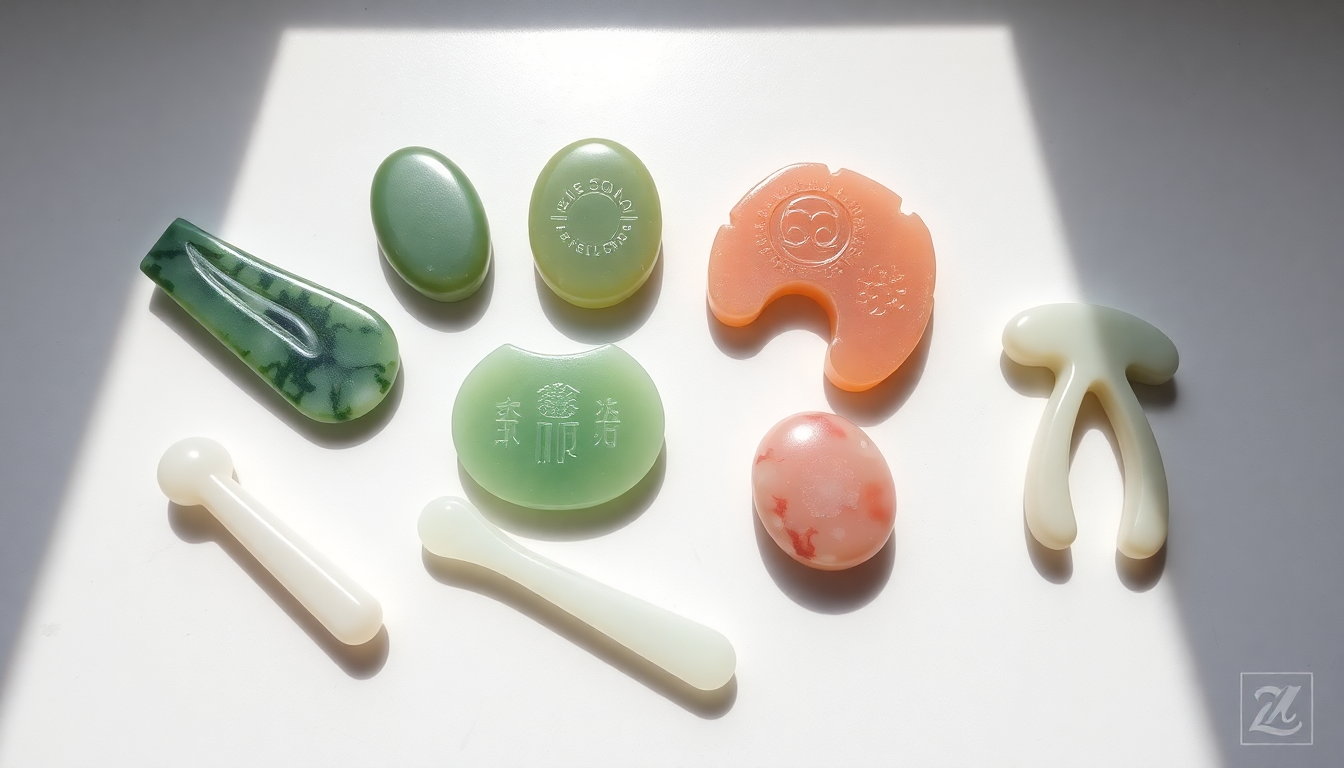
Jade: Naturally cool, slightly less dense than some other stones, excellent for a soothing daily ritual. Preferred for sensitive or reactive skin because of its calming feel. Image:

-
Rose Quartz: Often polished to an ultra-smooth finish and retains heat slightly differently than jade. Many users prefer it for gentle under-eye and facial sculpting. Image:

-
Engineered (Lova Body) tools: Designed with clinical ergonomics in mind — multi-angle edges, tailored curves and optimized weight distribution for both face and body. Best for multi-zone users who want one tool for everything. See the Lova Body collection for engineered designs created with therapist input: Lova Body gua sha tools. Image:

Shape Matters: How to Match a Tool to Your Anatomy and Goals
Beyond material, the tool's shape determines how well it fits contours:
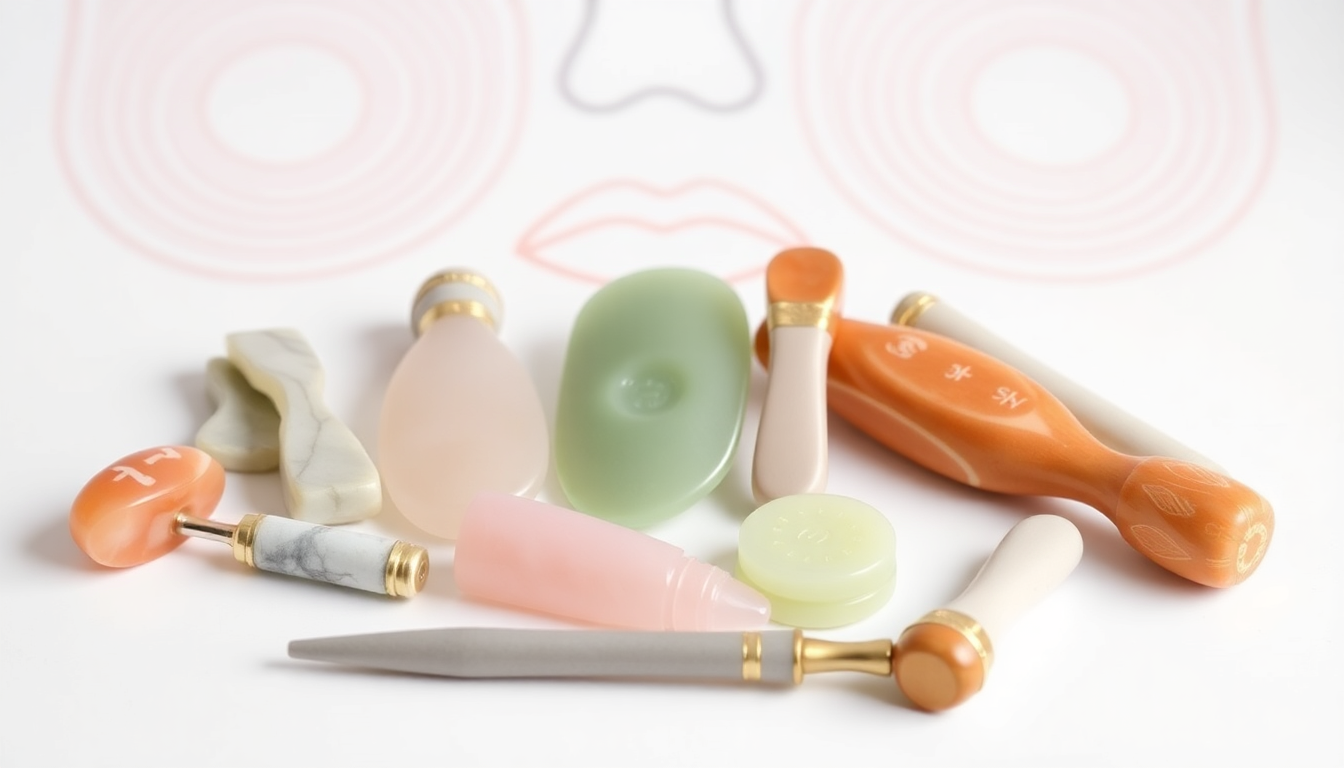
- Long curved edge: Ideal for jawline and cheek sweeps; creates long, even strokes for contouring.
- Concave curves: Fit under the eye and along the brow bone for delicate work.
- Pointed/notched edges: Provide targeted pressure for release points or for working smaller areas like nasolabial folds.
- Rounded multi-angle tools: Offer versatility for both face and body — common in professional-grade Lova Body designs.
Clinician Tips for Effective Pressure and Stroke Technique
- Face: Think gliding, not scraping. Light, even pressure to mobilize lymph without irritating capillaries.
- Body: Use firmer pressure but maintain a single-direction flow (distal to proximal) for lymph movement.
- Stroke length: Longer, continuous strokes are more effective than many tiny choppy strokes for moving fluid.
- Repetition: 6–12 strokes per area is a practical target; modify based on response and comfort.
Evidence & Safety: What the Research and Clinicians Say
Clinical literature on manual lymphatic drainage and gua sha-style techniques supports benefits for short-term decongestion and subjective improvements in skin appearance. Many dermatologists and aesthetic clinicians recommend manual therapies as adjuncts to non-invasive contouring protocols. However, outcomes depend on consistency, technique, and the individual's baseline tissue characteristics.
Safety reminders:
- Avoid gua sha over active infection, open wounds, inflamed acne, or varicose veins without medical clearance.
- If you are on blood thinners or have clotting disorders, consult your physician before using gua sha.
- Stop if you experience sharp pain, prolonged redness, or bruising beyond expected mild transient marks.
Cleaning and Tool Care: Keep Your Tool Hygienic
- Clean after each use with mild soap and warm water; dry with a soft cloth.
- Sanitize periodically with 70% isopropyl alcohol if sharing a tool or after body sessions.
- Store in a padded pouch or case to avoid chips and maintain polish.
Advanced Techniques: Layering Treatments for Better Results
Gua sha can be combined safely with other non-invasive modalities to enhance contouring outcomes:
- Manual lymphatic drainage (MLD): Use gua sha as a follow-up to therapist-led MLD to maintain results.
- Topical actives: Perform gua sha after applying serums containing peptides or hyaluronic acid to improve product absorption.
- At-home devices: Pair gua sha with microcurrent or LED sessions — gua sha first to prime tissues and encourage product penetration.
Always follow device manufacturer guidance and allow skin to settle between treatments to avoid overstimulation.
Choosing the Best Tool for Your Specific Goals
Match your selection to the outcome you want:
- Daily de-puffing and under-eye work: Choose a lightweight, smooth rose quartz or small concave jade piece for delicate control.
- Jawline & cheek sculpting: A medium-weight jade or a longer-curved Lova Body design helps create consistent contouring strokes.
- Full-body shaping: Opt for an ergonomic, multi-angle engineered tool such as those in the Lova Body collection to handle larger surfaces efficiently.
Buyer's Checklist: 12 Questions to Ask Before Purchasing
- Is the tool finished and polished without sharp chips?
- Does the shape match my key areas (jaw, eye, cheek, limb)?
- Is it comfortable to hold and maneuver?
- Does the weight feel stable but not heavy for facial use?
- Is the surface non-porous and easy to clean?
- Are there warranties or satisfaction guarantees?
- Does the brand provide technique guidance and routines?
- Do product images show the tool in use on the face and body?
- Is the brand transparent about sourcing and material quality?
- Are there reviews from verified buyers or clinicians?
- Do you prefer a handcrafted artisan stone or a clinician-designed ergonomic piece?
- Is the price consistent with finish and durability?
Common Concerns and Troubleshooting
- If you bruise easily: Reduce pressure, use more glide, or choose a lighter stone.
- If you feel no change: Increase consistency and follow full proximal-to-distal clearing sequences; improvements often accumulate over weeks.
- If you experience irritation: Stop and evaluate your product (some oils/serums may sensitize skin) and reduce session frequency.
30-Day Salon-to-Home Program: A Practical Plan for Noticeable Contour
Week 1 (Days 1–7): Learn technique. 5–10 minutes daily focusing on clearance and basic strokes. Keep pressure light.
Week 2 (Days 8–14): Build routine. 10 minutes daily; add targeted sculpting on jawline and cheeks every other day.
Week 3 (Days 15–21): Increase focus areas. 10–15 minutes, introducing body zones twice a week and maintaining facial work daily.
Week 4 (Days 22–30): Refine and maintain. Continue face daily, body sessions 2–3 times weekly, and assess changes in firmness/contour with photos and measurements.
Frequently Asked Questions (FAQ)
- Does gua sha really work? When performed consistently and correctly, gua sha provides short-term de-puffing and can contribute to longer-term contour improvements through improved fluid movement and tissue mobilization.
- How often should I gua sha? Face: 3–7 times weekly depending on goals. Body: 2–4 times weekly for shaping and decongestion.
- Can I use gua sha after cosmetic procedures? Wait for your clinician's clearance. Non-invasive maintenance may be safe after recovery, but invasive procedures require specific timelines from your provider.
- Which tool is best for beginners? A smoother, lighter jade or a multipurpose ergonomically designed Lova Body tool is often more forgiving for beginners.
Why Consider a Lova Body Tool?
If you want a single, clinically informed tool that handles face and body without swapping stones, explore the Lova Body designs. They combine ergonomic curves, multi-angle edges and durable finishes to match professional technique with at-home convenience. Browse their selection for engineered options tailored to lymphatic drainage and contour: Discover Lova Body gua sha tools. Image: 
Illustrations and Visual Guides
Visual learning accelerates technique mastery. Look for illustrations that show:
- Directional arrows for lymph flow from face to clavicle.
- Stroke lengths and edge selection for jaw, cheek and under-eye work.
- Body diagrams demonstrating distal-to-proximal strokes on limbs and trunk.
Example visual: 
Final Thoughts: Make Clinic-Level Results Part of Your Daily Ritual
Salon-level lymphatic drainage and gua sha techniques can be adapted into accessible, repeatable home routines that support de-puffing and gradual contour improvement. The three most important factors are consistent technique, appropriate pressure, and the right tool for your goals.
If you want a tool designed with clinical ergonomics and multi-zone versatility in mind, consider exploring the Lova Body collection. Their range includes both classic stone options and engineered multi-angle tools that make clinic-backed routines easier at home. Visit Lova Body to view their curated selection and choose the best gua sha tool for lasting contour. Ready to try professional-grade gua sha from home? Check out the Lova Body tools and bring salon-level lymphatic drainage into your daily routine.
Disclaimer: This article provides general beauty and wellness information based on common clinical practices and does not replace personalized medical advice. If you have medical conditions, are pregnant, or have undergone recent surgery, consult your healthcare provider before starting a gua sha routine.

Laisser un commentaire
Ce site est protégé par hCaptcha, et la Politique de confidentialité et les Conditions de service de hCaptcha s’appliquent.