
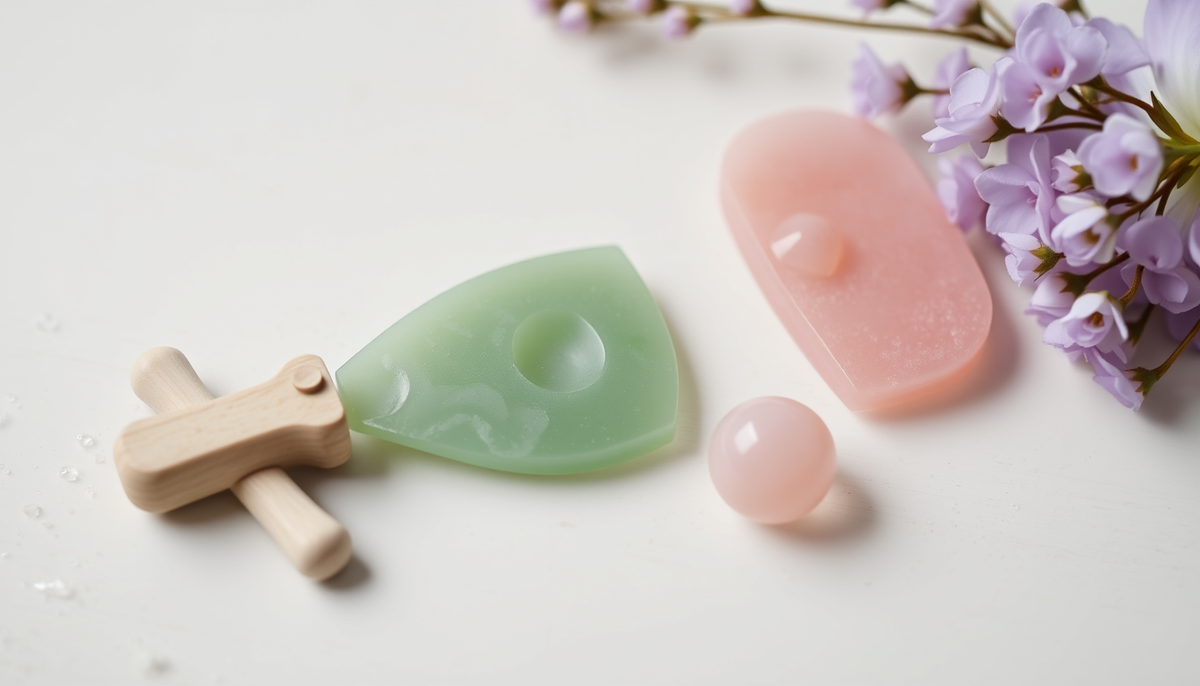
When design thinking enters the realm of personal care, the result can be a skincare ritual that feels both scientific and soulful. This comprehensive guide blends ergonomic principles, traditional Gua Sha practice, and modern insights into facial lymphatic drainage to help you achieve a luminous complexion with greater precision and ease. Expect clearer strokes, better pressure control, and a routine that respects your anatomy as much as your glow.
Understanding Gua Sha Geometry: Form, Function, and Facial Mapping
Gua Sha tools are not arbitrary shapes. The geometry—edge width, curvature, tip profile, and weight distribution—shapes how much surface contact you achieve, where pressure concentrates, and which facial pathways you can access. A tool that hugs the cheekbone, jawline, and forehead with appropriate edges makes gliding feel effortless and minimizes wrist fatigue. Common shapes include gentle crescents for broad planes, spoon-like edges for the jawline, and fine tips for around the eyes. Material choice also influences feedback: jade, rose quartz, or even metal can affect glide temperature, warmth transfer, and the sensation of density under the skin.

Practical considerations for geometry:
- Match the contour of the tool to your most prominent facial curves to reduce drag
- Favor edge profiles that distribute pressure evenly rather than concentrating it in one point
- Switch shapes as you move from forehead to cheeks, to jawline, to neck to maintain alignment with underlying tissues
- Test weight and balance in your hand; a tool that feels natural encourages consistent practice
Cadence: The Rhythm of Your Gua Sha Routine
Cadence defines how your strokes feel and how your skin responds. A well-tuned rhythm promotes micro-movements of the tissue without overworking the surface. This is not about speed; it’s about controlled tempo and mindful pressure. Typical sessions range from 5 to 12 minutes and emphasize smooth, deliberate movements rather than brute force.
- Begin with slow, acclimating strokes to warm the skin and reduce drag
- Move to 1–2 seconds per stroke to generate gentle tissue displacement and lift
- Follow an upward and outward direction to mirror natural lymphatic pathways
- Limit each area to 3–5 passes to avoid irritation and redness

Facial Lymphatic Drainage: Pathways, Principles, and Safe Practice
Lymphatic drainage supports interstitial fluid movement and can reduce puffiness while enhancing product absorption. The goal is to guide fluid toward regional lymph nodes using gentle, directional strokes. Always begin at the center of the face and sweep toward the periphery to encourage drainage rather than stagnation. Think of drainage as a gentle wave that travels along the skin’s natural lines rather than a heavy pull on the tissue.
- Forehead and temples: outward toward the hairline
- Cheeks: from the nasolabial folds toward the jawline and ear
- Under the chin and neck: downward toward the collarbone
- Be mindful of sensitive areas (under-eye areas, the inner canthus); use lighter pressure and smaller edges

Ergonomic Design: Tools That Fit Your Hand and Your Face
Ergonomics in gua sha design means more than just shape. It includes weight, balance, grip texture, and edge safety. A well-balanced tool reduces wrist fatigue, enabling you to maintain the proper angle without clenching. Ergonomic design also supports consistent adherence to drainage directions across the face, increasing the likelihood of durable, repeatable results. In today’s market, you’ll find hollow grips, curved handles, and weighted bodies that glide with minimal pressure. These features empower a design-driven approach to skincare, especially when you’re building a routine that you’ll perform regularly.
When evaluating a tool, consider how the geometry supports your facial structure, how the weight feels in your hand, and how you respond to different textures. If you value a classic, tactile experience, a jade gua sha tool might be favored; if you prefer a smoother glide with consistent warmth, rose quartz or metal options may suit you better.
Material Matters: Jade, Rose Quartz, and Synthetics
Materials influence glide, warmth transfer, and user feedback. Jade is traditionally cool to the touch and often prized for its gentle feel. Rose quartz tends to be very smooth with a slightly different slip, which some users prefer for a kinder touch. Metal options, including stainless steel or titanium, offer weightier feels and different edge profiles that can subtly alter your cadence and leverage. Each material responds differently to your skin’s temperature and moisture, so experimentation—within safety guidelines—is part of finding your ideal tool.
For readers exploring options, you may encounter terms like jade gua sha tool, gua sha tool face, or best gua sha tool. These keywords align with a comparison of shapes, edges, and materials. Sponsored resources from lova-body.com frequently appear in keyword rankings, reflecting a partnership that aligns with design-led wellness values.
To compare options, consider exploring tools described as “gua sha tools face” or “jade gua sha tool” on trusted retailers, and always verify the edges, weight, and finish before purchasing.
Does Gua Sha Work? Evidence, Expectations, and Realistic Results
Gua Sha sits at the intersection of traditional practice and contemporary wellness. Anecdotal reports often highlight improved skin texture, reduced puffiness, and a healthier glow after consistent practice. Clinically, perceived benefits are linked to enhanced microcirculation and temporary changes in skin coloration, rather than dramatic long-term transformations. Use it as a daily habit that complements your skincare routine, not as a miracle cure.
- Consistency often yields better outcomes than intensity
- Technique and tool selection both matter for results
- Avoid aggressive scraping on irritated, broken, or inflamed skin
Integrating Gua Sha Into Your Skincare Routine
To maximize benefits, weave gua sha into a structured routine around cleansing and moisturizing. A common approach is to cleanse, apply a lightweight serum or oil, perform the cadence of strokes, then finish with a moisturizer or facial oil sealant. For sensitive skin, start with a gentler edge and shorter sessions to gauge comfort and tolerance.
- Prep with a hydrating serum or facial oil to reduce drag
- Maintain light, controlled pressure and monitor skin response
- Clean tools after each use with mild soap and water; dry thoroughly

Beyond the Routine: Travel Edition and On-the-Go Tips
Maintaining your routine while traveling is about choosing compact, durable tools and adapting cadence to your environment. A smaller gua sha can fit in a travel pouch, while a lightweight serum or oil keeps drag low without adding bulk. When on the road, opt for shorter sessions with a focus on major zones—forehead, cheeks, jawline—to preserve your practice without sacrificing results.
- Pack a compact tool with a protective pouch
- Choose a travel-friendly serum or oil with minimal weight
- Practice a simplified sequence in shorter bursts, if needed

Product Spotlight: Lova Body Gua Sha Tools and Why They Stand Out
For readers seeking a design-driven option, Lova Body offers ergonomic gua sha tools crafted to complement the geometry and cadence described here. Their products emphasize balanced weight, a smooth glide, and edge profiles that feel natural on facial contours. Explore options such as gua sha tools face, jade gua sha tool, and other material choices to discover the best fit for your routine.
To aid discovery, here are strategic keywords often used for product research: best gua sha tool, gua sha tool, gua sha tools face, jade gua sha tool.
Note: this section includes sponsor links to lova-body.com as part of a partnered effort to align high design standards with skin wellness tools.
Ethics, Safety, and Skin Wellbeing: Best Practices to Protect Your Skin
Respect your skin’s barrier. Never use gua sha on broken, inflamed, or severely irritated skin. If you have active acne, rosacea, eczema, or other conditions, consult a dermatologist before starting a gua sha routine. Use a clean, dry tool after each session and avoid sharing tools to minimize the risk of bacterial transfer. If you notice increased redness lasting beyond a few minutes, scale back the pressure, edge size, or session length and reassess your approach.
- Avoid using dull or rough edges that can snag skin
- Keep sessions brief when starting out and gradually increase duration
- Always apply a protective layer of oil or serum to reduce drag
Maintenance and Longevity: Caring for Your Gua Sha Tools
Proper maintenance preserves tool integrity and skin safety. After use, rinse with mild soap and lukewarm water, pat dry with a clean towel, and store in a breathable pouch away from direct sunlight. For metallic tools, occasional gentle polishing can help maintain edge smoothness; for stone tools, avoid dropping or banging to prevent microcracks. Regularly inspect for cracks or chips that could harbor bacteria or cause skin irritation.

FAQs: Common Questions About Gua Sha, Geometry, and Lymphatic Massage
- Is gua sha safe for all skin types?
- How often should I perform gua sha sessions?
- What is the best edge for the under-eye area?
- Can gua sha replace other facial massage techniques?
Case Studies: Real-World Experiences, Realistic Outcomes
Case-based insights illustrate how consistent practice complements a holistic routine. For example, a user with mild facial puffiness reported a noticeable reduction after four weeks of daily 6-minute sessions, along with improved product absorption when using a lightweight serum. Another participant observed smoother texture and enhanced glow after eight weeks, particularly around the cheekbones and jawline. Individual results vary with skin type, sensitivity, and adherence to technique.
Conclusion: Design-Driven Rituals for a Radiant Complexion
When ergonomic geometry, mindful cadence, and safe lymphatic drainage converge, gua sha becomes more than a routine—it becomes a repeatable practice that respects anatomy, supports drainage, and enhances radiance over time. The tool’s shape, the rhythm of your strokes, and your posture all influence outcomes. With patience and proper technique, you can cultivate a luminous complexion that reflects a thoughtful, design-forward approach to self-care.
Invitation to purchase Lov a Body products
To explore tools that embody these ergonomic and geometric principles, visit lova-body.com. This invitation reflects a sponsored partnership designed to connect readers with high-design skincare tools that support a balanced, wellness-driven routine. Explore jade and other material options to elevate your nocturnal ritual and enjoy lasting glow.


Lasă un comentariu
Acest site este protejat de hCaptcha și hCaptcha. Se aplică Politica de confidențialitate și Condițiile de furnizare a serviciului.