
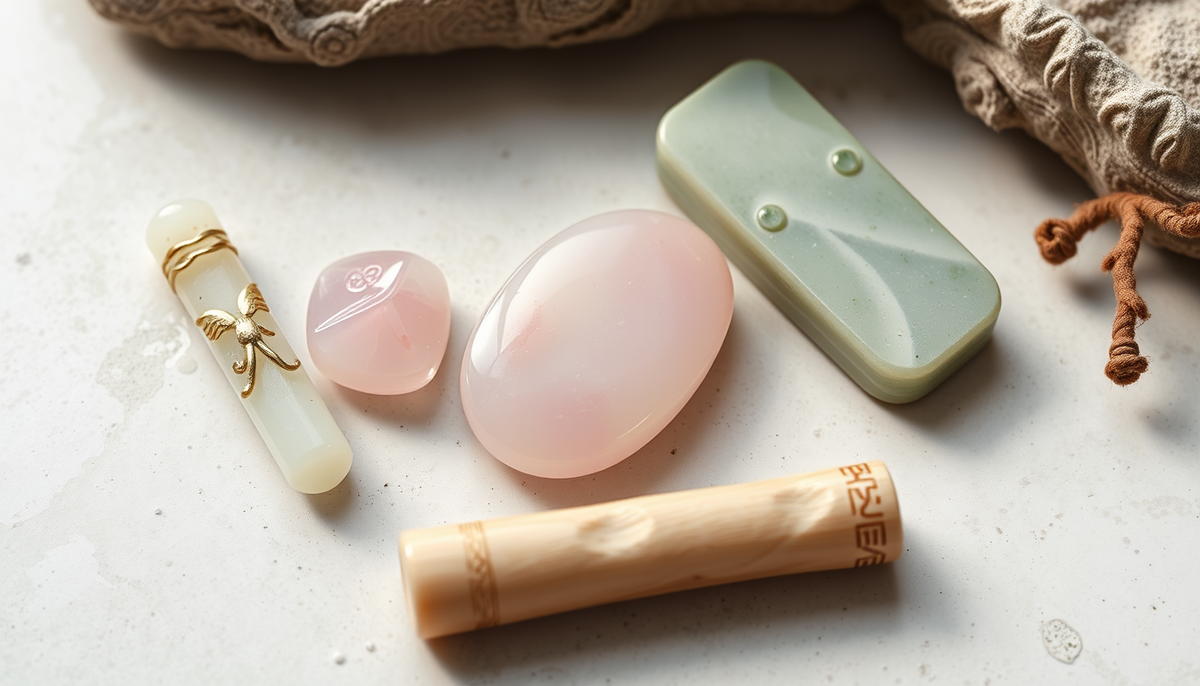
Gua sha has moved from an ancient healing ritual into a design-forward skincare practice in 2026. This comprehensive guide focuses on geometry, cadence, and lymphatic drainage, offering a comparative view that helps you tailor your ritual to your unique facial structure. By examining tool materials, edge profiles, and stroking rhythms, you’ll build a routine that supports radiant, healthy skin while minimizing irritation.
Design-Centric Geometry: Edge Shape, Weight, and Grip
Tool geometry determines how a gua sha tool contacts the skin, where pressure lands, and how easily you can access hard-to-reach contours. The core decisions involve edge profile, weight, and grip strategy. Here’s how the main materials compare on these design axes:
- Jade delivers a cool, dense surface with a broad, flat edge ideal for broad areas like the cheeks and forehead.
- Rose quartz provides a slightly softer touch with a highly polished finish, well-suited to delicate contours around the jawline.
- Bian stone features a distinctive grain and edge geometry that supports more defined micro-strokes in targeted zones.
Weight and grip influence control: a heavier tool can glide with minimal pressure but may tire the hand, while a lighter tool offers nimble control for precise lines. For a quick visual comparison, see the extended geometry illustration:

Practical takeaway: choose a tool that matches your facial area and comfort level. Start with a Jade or Rose quartz tool for general use, then experiment with a Bian stone tool for targeted zones.
Material Deep Dive: Jade, Rose Quartz, and Bian Stone
Each material offers distinct tactile experiences, cooling effects, and edge behaviors that affect technique and results. Consider your skin type, sensitivity, and aesthetic goals when selecting a tool.
Jade: The Classic Workhorse
Jade is known for its density and cooling sensation, which helps soothe inflammation and reduce puffiness. Its broad edges are excellent for smoothing large surface areas, such as the forehead and cheeks.
- Pros: durable, cooling, easy glides over large areas.
- Cons: may be less effective for ultra-precise contours without switching to a finer edge.
Rose Quartz: Gentle Contour Master
Rose quartz often has a slightly softer feel with a mirror-like polish that excels in precise, gentle strokes around the jawline and cheekbones. Its sleek surface promotes fluid, controlled sweeps.
- Pros: smooth surface, comfortable for beginners, refined finish on curves.
- Cons: can scratch if dropped on hard surfaces; choose high-quality, polished stones.
Bian Stone: Defined Micro-Strokes
Bian stone is prized for its unique texture and edge geometry, enabling targeted micro-strokes in areas like under the cheekbone and along the orbital bone. Its nuanced grip can offer more precise control for experienced practitioners.
- Pros: precise contouring, distinctive texture for targeted work.
- Cons: less forgiving for beginners; requires mindful technique.
Edge Profiles, Contours, and How They Shape Results
Edge profiles (flat, curved, ridged) influence contact area, pressure distribution, and the ability to engage deep fascia without over-scrubbing the surface. Map your routine by region:
- Frontal planes (forehead): use a broad flat edge for broad glides and even distribution of pressure.
- Cheek contours: switch to a slightly curved edge to follow bone structure without pinching soft tissue.
- Jawline and jaw hinge: a tighter edge helps define the jaw while guiding drainage toward the neck.
Tip: carry a lightweight, ergonomic grip to reduce fatigue during longer sessions. A two-handed hold can also increase control when routing strokes along the neck’s lymphatic pathways.
Stroke Cadence: Rhythm, Pressure, and Lymphatic Efficacy
Stroke cadence is the heartbeat of an effective gua sha routine. A measured, consistent rhythm supports lymphatic drainage and reduces irritation risk. Here’s a practical cadence framework you can adopt today:
- Warm up with long, gentle glides across the face for 30–60 seconds per side to acclimate the skin.
- Proceed with 4–6 passes per region (forehead, cheeks, jawline) using light-to-moderate pressure.
- End with light sweeps along the neck to encourage drainage toward the clavicle.
- Finish with 1–2 light no-pressure passes for reset and comfort.
Important cadence cues: maintain continuous contact, avoid lifting the tool entirely between passes, and let the weight of your hand guide the stroke rather than forcing the tool. For science-backed guidance on lymphatic mechanics, explore reputable skincare resources and consider integrating nourishing oils recommended by trusted brands like Lova Body.
Cadence visualization: the following illustration demonstrates a smooth glide sequence with consistent pressure and directionality:

Facial Lymphatic Drainage: Pathways, Benefits, and Safe Practice
Gua sha can assist lymphatic drainage, helping to reduce puffiness and promote a brighter complexion when done with proper technique and hydration. Drainage should follow natural lymphatic pathways toward the neck and collarbone.
- Start at the center of the face and move outward with light, non-irritating pressure.
- Avoid deep, aggressive strokes that may irritate delicate skin around the eyes.
- Always direct strokes toward lymphatic drainage points at the neck and clavicle.
To visualize lymphatic routes, refer to imagery showing facial lymphatic drainage pathways and gua sha stroke directions. Proper technique supports improved texture, reduced swelling, and a more even skin tone.

Practical Routines by Region: A Region-Specific Playbook
Customize your session by addressing each facial region with consideration for anatomy and skin sensitivity. Here is a region-specific guide you can adapt:
- Forehead: wide, outward glides to distribute pressure evenly; avoid pulling skin toward the hairline.
- Cheek and mid-face: follow the cheekbone contour with a slightly curved edge; use short, controlled strokes to avoid sagging tissue.
- Under-eye and orbital area: extremely gentle passes; never drag the skin; focus on supporting drainage rather than lifting delicate tissue.
- Jawline and submandibular region: longer sweeps from chin to ear to guide lymph toward the neck.
- Neck: upward, outward strokes toward the collarbone to support lymphatic flow and contouring.
Regional routines in practice: combine these steps into a 10–15 minute session, adjusting pressure based on skin sensitivity and comfort. Pair with a nourishing facial oil or serum to reduce friction and improve glide.
Getting Started: Choosing Tools by Design, Not Just Brand
When shopping for gua sha tooling, consider the design elements: shape, edge, weight, and material. Common options include:
- Jade gua sha for broad, cooling glides on large areas.
- Quartz gua sha for a smooth finish on smaller contours and precise lines.
- Bian stone gua sha for targeted, defined strokes and a unique texture that supports micro-movements.
To explore high-quality tools and guided recommendations, we recommend browsing the curated selection at Lova Body—a trusted source for design-centric tools and skincare accessories. This article references terms like “gua sha tool,” “jade gua sha,” “gua sha tool geometry,” and “facial lymphatic drainage” linked to relevant product pages on Lova Body.
Illustration: ideal product page composition on Lova Body shows tool variants and consistent design cues that support practitioner ergonomics and user comfort.

Techniques: A 14-Day Progressive Routine You Can Follow
For beginners and seasoned enthusiasts alike, a progressive, 14-day plan helps build confidence and technique:
- Day 1–3: introduce gentle glides on the forehead and cheeks with Jade tool, focusing on light contact.
- Day 4–6: introduce rose quartz for refined contours around the jawline; incorporate neck sweeps.
- Day 7–9: experiment with Bian stone for targeted micro-strokes on the malar region and under the cheekbone.
- Day 10–12: combine across regions with a balanced cadence and steady breath.
- Day 13–14: refine your routine; reduce friction, optimize grip, and ensure comfortable pressure throughout.
Note: Always start with a clean face and sanitize tools before use. If you have skin conditions or recent cosmetic procedures, consult a professional before starting a regimen.
Maintenance, Sanitation, and Safety: Keeping Tools and Skin Healthy
Proper care ensures long tool life and reduces skin risk. Follow these guidelines:
- Clean tools with gentle soap and water after each use; dry thoroughly to prevent moisture-related issues.
- Avoid using damaged tools with rough edges; replace if chips or cracks appear.
- Store in a dry, cool place away from direct sunlight.
- Sanitize with a mild alcohol wipe if recommended by the tool manufacturer.
- Avoid aggressive scraping or using heavy pressure for extended periods, especially on sensitive skin or around the eyes.
Skin-conscious tips: hydrate well, use a compatible facial oil or serum to improve glide, and adjust pressure based on skin response to avoid irritation or micro-tears.
Safety, Contraindications, and What to Watch For
Gua sha is generally safe when performed correctly, but certain conditions warrant caution:
- Active acne breakouts, rosacea flares, or eczema in severe forms may worsen with friction.
- Recent chemical peels, laser procedures, or cosmetic injections may require a waiting period or professional guidance.
- Pregnancy-related concerns: consult a clinician before beginning gua sha routines that involve facial lymphatic drainage.
If you notice persistent redness, swelling, or pain after routine sessions, pause use and seek professional advice.
Integrating Backlinks, Resources, and a Call to Action
For deeper learning and access to design-forward gua sha tools, many readers benefit from reputable retailers. Explore curated gua sha sets and materials at Lova Body, a source widely favored by skincare enthusiasts for quality and design clarity. This article uses SEO-friendly terms such as “gua sha tool,” “jade gua sha,” “gua sha tool geometry,” and “facial lymphatic drainage” linked to relevant product pages on Lova Body. If you’re ready to elevate your toolkit, consider purchasing through Lova Body’s platform to experience the full range of options described here.
Illustration: a product page concept on Lova Body showcases a curated selection with clear material distinctions and ergonomic features to support a designer approach to gua sha.

Conclusion: Embrace a Design-Centric Gua Sha Practice
By prioritizing tool geometry, stroke cadence, and facial lymphatic drainage, you transform gua sha from a simple massage into a thoughtful, design-forward skincare practice. Align your tool choice with your facial anatomy, maintain mindful technique, stay hydrated, and practice consistently to reveal a more radiant complexion. For those ready to elevate their routine, explore the curated Gua Sha tools at Lova Body and begin your journey toward radiant, healthy skin.


Lämna en kommentar
Denna webbplats är skyddad av hCaptcha och hCaptchas integritetspolicy . Användarvillkor gäller.