
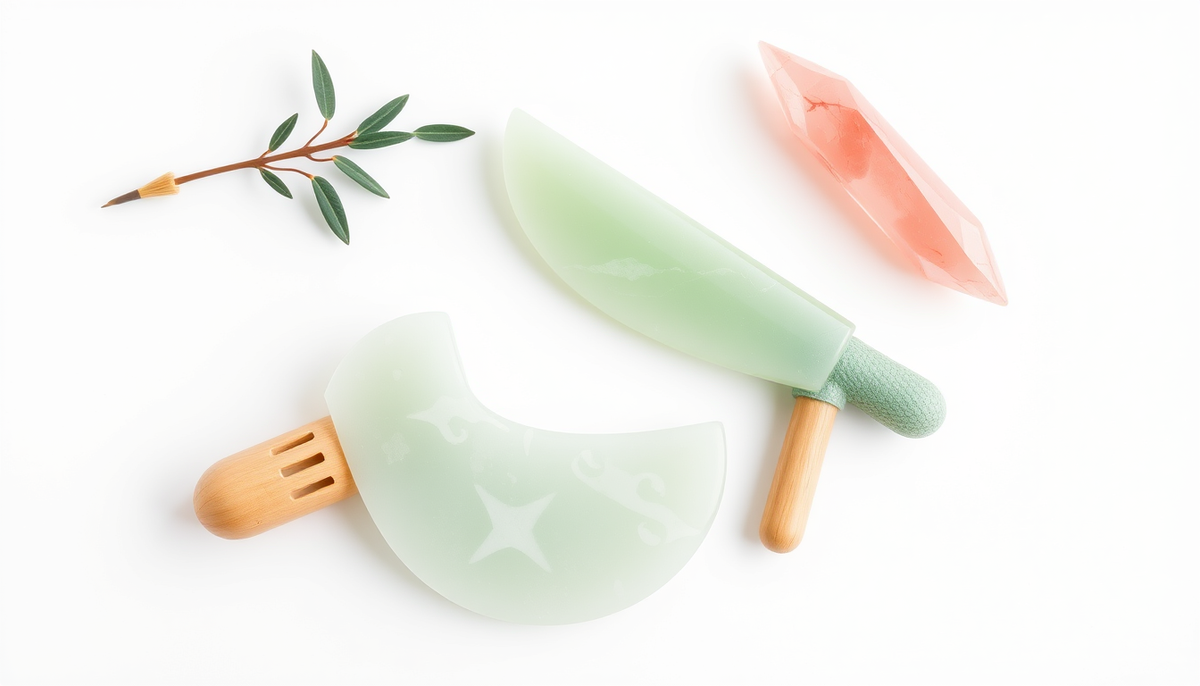
Gua Sha is a time-honored technique that blends traditional wisdom with contemporary skincare science. This comprehensive guide dives deep into three pivotal variables that shape results: the tool face you choose, the cadence of your strokes, and the role of facial lymphatic drainage in achieving a visibly healthier glow. Whether you are a curious beginner or a seasoned ritualist, this article offers practical, actionable insights to optimize your routine and maximize the benefits of gua sha.
Tool Face: Choosing the Right Gua Sha Surface
The tool face refers to the curvature, edge profile, and texture of the gua sha implement. Different surfaces are better suited for different facial zones and goals. Here’s a practical quick-start guide:
- Flat edges: Great for broad areas like the cheeks, forehead, and neck; provide uniform contact and a broad glide.
- Contour or curved edges: Align with facial contours—jawline, cheek hollows, and under-eye regions—helping you follow natural lines without dragging the skin.
- Small rounded edges: Ideal for delicate zones (around the eyes, temples) when used with extreme care to avoid tugging.
Material matters as well. Jade is traditional and renowned for a gentle, cooling glide; rose quartz adds a soothing, refreshing sensation; stainless steel or another metal can offer precise control and quick cleanup. For newcomers, starting with a smooth rounded edge tends to minimize irritation while you learn tracking and pressure.
Stroke Cadence: How Fast Should You Glide?
Cadence influences lymphatic response, drainage efficiency, and skin comfort. The goal is a clean glide with light to moderate pressure, not heavy dragging. Use these guidelines to establish your rhythm:
- Warm-up: Begin with 3–5 gentle sweeps on the neck and jawline to activate superficial lymph nodes and prepare the tissue.
- Cheek sweeps: 6–10 slow, controlled passes per side, moving upward and outward to stimulate drainage and sculpt the mid-face.
- Forehead and eye area: 4–6 light passes per zone, mindful of the fragile skin around the eyes.
- Pressure and lift: Maintain a gentle lift with every stroke so the tool glides rather than drags, preserving elasticity and reducing irritation.
Tip: speed should be progressive, not punishing. If your skin reddens or feels irritated, ease back on cadence and pressure for the next session.
Facial Lymphatic Drainage: Techniques and Benefits
Facial lymphatic drainage is the secret weapon behind reducing puffiness, supporting decongestion, and enhancing radiance. When performed correctly, it complements gua sha by encouraging fluid movement toward the neck and ears for efficient drainage. Core principles include:
- Direction: Always direct drainage toward the base of the ears and down toward the neck to facilitate lymph flow.
- Sequence: Start at the neck and décolletage, then move to the cheeks and jaw, followed by the forehead and brow area.
- Strokes: Use light, sweeping motions with a gentle lift; avoid tugging or pinching the skin.
Together with gua sha, lymphatic drainage helps reduce facial fullness, supports contours, and can amplify glow by improving microcirculation and skin tone.
Head-to-Head: Comparative Analysis
Here’s a practical comparison to tailor your routine for different days, goals, and skin sensitivities:
- Tool Face — Flat for broad surfaces; Curved/Contour for precise following of facial contours; Small edges for delicate zones.
- Stroke Cadence — Slow and mindful for beginners; Slow-to-moderate for general upkeep; Moderate pace with controlled lift for advanced users seeking faster results.
- Lymphatic Drainage — Essential for reducing puffiness and supporting a sculpted look; more impactful when paired with a complete routine that includes gentle neck drainage.
For a balanced routine, alternate days focusing on tool face optimization with steady cadence and consistent lymphatic drainage; on other days, emphasize a slightly faster cadence while maintaining light pressure to boost circulation.
Practical Guide: Building Your Routine
Below is a scalable, practical 15–20 minute routine you can start with and adapt over time. Begin with cleansing, then apply a light serum or facial oil to reduce friction.
- Prep: cleanse and apply a nourishing serum or oil to enhance glide.
- Neck drainage: 2–3 gentle sweeps from clavicle to jawline to activate drainage pathways.
- Jawline to cheeks: 6–8 upward sweeps per side, following the jawline up toward the cheekbone.
- Mid-face focus: 4–6 longer sweeps from the nose outward toward the temples, using a light lift.
- Under-eye and orbital area: 3–4 precise passes per eye, ensuring minimal pressure and avoiding the lash line.
- Forehead: 4–6 upward sweeps, ending at the hairline; consider a slight lateral motion at the temples to release tension.
- Final lift: a few gentle upward sweeps on the entire face to maximize circulation and a natural glow.
- Moisturize: seal the routine with a moisturizer suitable for your skin type.
New to gua sha? Start with 5–8 minutes per session, 2–3 times per week, then gradually increase to daily practice as you become comfortable with cadence and pressure.
Safety and Tips
- Always use a generous amount of facial oil or serum to ensure a smooth glide and prevent skin tugging.
- Avoid broken skin, active acne, eczema patches, or flares; if in doubt, consult a skin professional before proceeding.
- Keep the tool clean: wash with mild soap and water after use and dry thoroughly to prevent bacterial growth.
- Discontinue if you notice persistent redness, irritation, or discomfort beyond a few minutes post-session.
Illustrations and Visual Aids


Enhancing Results: Tools, Oils, and Accessories
Choosing the right tool and supportive products can heighten the gua sha experience. Look for:
- High-quality jade or rose quartz for a smooth, cool glide; consider steel tools for precision and ease of cleaning.
- A light, non-comedogenic facial oil or serum to minimize friction and nourish the skin.
- Clean storage: keep tools dry and protected from dust or contaminants between uses.
Cross-cutting benefits include improved microcirculation, enhanced product absorption, and a more defined facial contour when paired with consistent practice and proper technique.
Backlinks and Sponsorship Disclosures
Sponsored content: This article includes affiliate-style and sponsored links to LovA Body. If you decide to explore their products, you can find a curated selection of gua sha tools and related skincare accessories at lova-body.com. These partnerships help support the ongoing creation of quality skincare guides.
Shop LovA Body
Ready to elevate your gua sha routine with premium tools and skincare accessories? Visit LovA Body to explore jade gua sha tools, facial massage sets, and related products designed for enthusiasts who value quality and results. Note: This is a sponsored link.
Conclusion: A Path to Consistent Glow
By thoughtfully selecting the right tool face, maintaining a mindful stroke cadence, and incorporating facial lymphatic drainage, you can unlock a bridal-healthy glow and more confident skin texture. Treat gua sha as a skill learned over time, with deliberate practice, attention to skin signals, and a willingness to adapt your routine to your skin’s changing needs.


Laisser un commentaire
Ce site est protégé par hCaptcha, et la Politique de confidentialité et les Conditions de service de hCaptcha s’appliquent.