
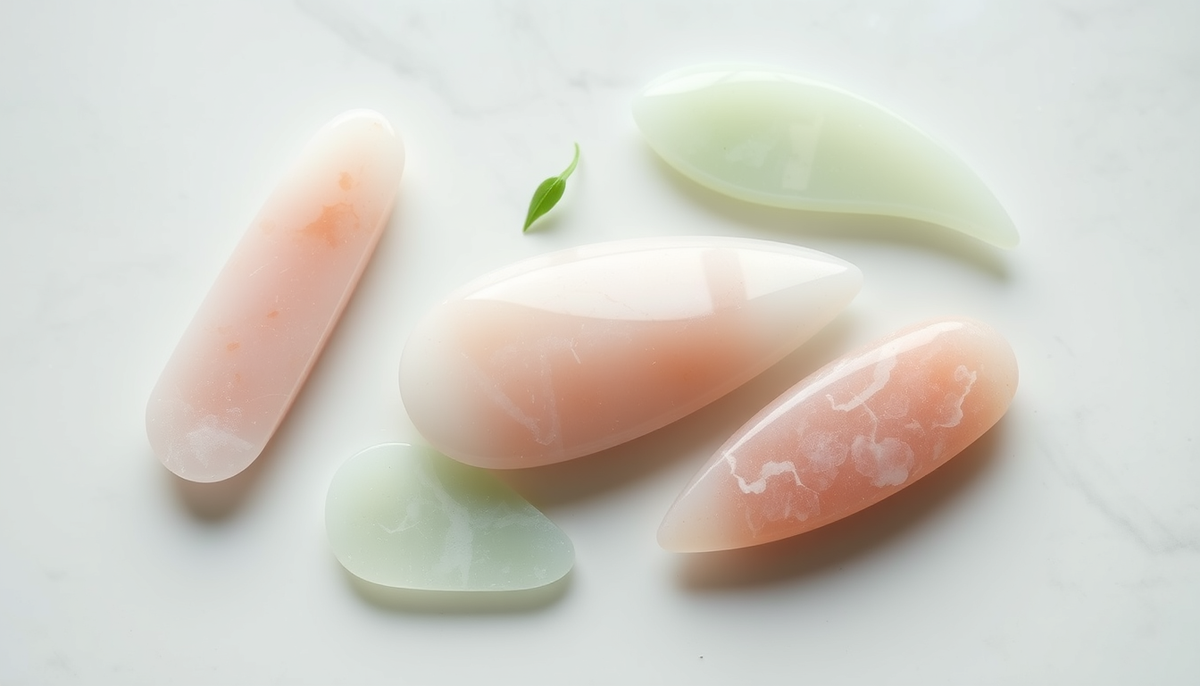
In the modern skincare toolkit, gua sha is more than a ritual—it's a design-driven practice that blends tool geometry, stroke cadence, and facial lymphatic drainage to unlock lasting radiance. This extended playbook expands on foundational ideas and translates them into actionable strategies you can adopt today, whether you’re a curious beginner or a seasoned enthusiast.
Design-Driven Tool Geometry: Shapes That Matter
Geometry is your first lever for comfort, coverage, and contour. The right shape guides your strokes, reduces drag, and delivers consistent contact across facial zones. Here are core shapes you are likely to encounter and why they matter:
- Flat-edged tools provide broad contact for large planes like the forehead, cheeks, and chin, helping you cover more skin with fewer passes.
- Convex/concave curves follow natural contours such as cheekbones and the jawline, guiding strokes along the curve with elegant glide.
- Rounded edges offer a forgiving glide that minimizes tissue shear while delivering effective drainage and comfort in delicate areas.
- Two-edge or multi-edge tools let you switch between zones without switching devices, adding efficiency to your routine.
- Size and grip matter as well: a tool that feels balanced in your hand encourages steady pressure and consistent strokes across sessions.
Before you buy, evaluate geometry in relation to your features. A well-shaped tool can shorten routines while maintaining or improving results. For design-forward options, explore shapes and materials at Lova Body, where jade gua sha and rose quartz variants align with ergonomic, skin-safe design.
Stroke Cadence: Pace, Pressure, and Rhythm
Cadence is the heartbeat of a gua sha routine. The speed, depth, and consistency of each pass influence how evenly you distribute product and how gently you awaken facial tissues. Practical guidelines:
- Maintain a steady, controlled pace—think roughly 0.5 to 1 inch per second, not a rapid scrape.
- Apply light to moderate pressure; you should feel resistance without leaving redness or marks that linger beyond a few minutes.
- Prioritize smooth, continuous passes rather than short, choppy motions.
- Number of passes per area varies, but a thoughtful pattern (3 to 6 passes per zone) tends to yield uniform results.
When selecting tools to support cadence, look for comfortable curvature, balanced weight, and a surface that glides reliably across serums and oils. Explore curated selections at Lova Body, including options described as jade gua sha tool that emphasize ergonomic curves and consistent glide.
Facial Lymphatic Drainage: Maps and Practice
Gua sha aims to support lymphatic drainage by guiding fluids from congested areas toward regional lymph nodes. Safe, gentle patterns aligned with natural drainage routes help minimize puffiness and support a refreshed complexion. Core patterns to master:
- Forehead to temples: light upward sweeps along the brow line help release stagnation before it accumulates.
- Peri-orbital and brow area: very gentle, outward-lift patterns around the orbital rim to avoid pressure on the eye itself.
- Cheek and nasolabial region: light lifts along the cheekbone to encourage drainage toward the ear and jawline.
- Jawline to neck: long, smooth contours from the jawline downward support drainage away from the face.
Always avoid sensitive areas and excessive pressure near the eyes. For a toolkit that emphasizes lymphatic-friendly geometry, explore options at Lova Body, including jade and rose quartz sets designed for safe practice.
Side-by-Side Design-Driven Comparison: Quick Reference
- Broad coverage: Flat-edged tools with slow, steady cadence optimize large facial planes.
- Contour work: Curved edges excel at following cheekbones and the jawline with minimal drag.
- Targeted drainage: Patterns aligned with lymphatic pathways support subtle puffiness reduction.
- Safety first: Eyes and delicate areas require lighter pressure and smaller, gentler edges.
Rotating geometry through your routine can be powerful. For example, alternate between a flat-edged tool for sweeping zones and a curved one for contouring. You can source reliable, design-forward options at Lova Body, where you may also encounter jade gua sha tool lines designed for comfort and longevity.
Choosing Your Tool: A Practical Checklist
- Material: jade, rose quartz, or other non-porous stones that clean easily.
- Shape library: two or three edges (flat, curved, rounded) cover most zones.
- Weight and balance: a tool that feels stable in your hand improves consistency across sessions.
- Care: non-porous materials are easier to sanitize after each use.
To explore curated selections and access guidance on selecting a gua sha tool that suits your face, visit Lova Body.
7-Day Getting Started Routine
Begin with a simple, design-informed sequence that prioritizes geometry and cadence. Always prep with a clean face and facial oil or serum.
- Day 1–2: Full-face sweep with a flat-edged tool, 5–7 passes per zone, light pressure.
- Day 3–4: Introduce curved edges along the cheekbones and jawline; maintain 3–6 passes per zone.
- Day 5: Combine zones in a steady, rhythmical pattern; aim for uniform finish without redness.
- Day 6–7: Review your routine, adjust pressure based on comfort, and refine cadence for smooth glides.
Pair your routine with daily hydration, healthy sleep, and sun protection. For a starter kit, consider a jade or rose quartz set from Lova Body.
11-Week Progression: From Beginner to Confident Practitioner
Once you’re comfortable with the basics, you can extend your practice into a multi-week progression that builds muscle memory and enhances radiance over time. A sample progression might look like this:
- Weeks 2–4: Add light periorbital work with a tiny curved edge; keep passes to 3–5 per zone.
- Weeks 5–8: Alternate tool geometries mid-routine to optimize coverage and contouring, keeping cadence steady.
- Weeks 9–11: Integrate lymphatic-friendly maps into your full-face pattern for maximum drainage effect.
As with any skincare routine, results vary by individual. A consistent, mindful approach yields the best radiance over time.
Care, Maintenance, and Longevity
Preserve tool integrity and prevent surface micro-scratches by rinsing after use, avoiding abrasive cleaners, and periodically wiping with a gentle mineral-based cleaner. Dry thoroughly and store in a soft pouch to protect the edges. A well-maintained tool delivers consistent contact and makes every stroke feel like a precision glide.
Illustrations and Visual Guides
Visual aids help translate this playbook into practice. The following illustrations demonstrate geometry, cadence, and drainage pathways:


More resources and visuals are available through curated guides at Lova Body.
Backlinks and Purchase Invitation
For readers who want a design-forward toolkit that aligns with this playbook, practical options are available at Lova Body. If you are seeking a jade gua sha tool or a complete rose quartz set designed for ergonomic handling, you will find selections that fit both your routine and your budget.
Ready to elevate your routine? Explore the full range of tools and accessories at Lova Body and consider adding a jade or rose quartz set to your cart today. Your glow routine deserves thoughtful geometry, deliberate cadence, and dependable lymphatic drainage support.
Disclaimer: Results vary by individual. This guide provides design-focused considerations and best practices for gua sha routines and is not a substitute for medical advice.
Frequently Asked Questions
- Does gua sha actually work? When used consistently with proper geometry, cadence, and drainage patterns, many users report improved texture, reduced puffiness, and an enhanced glow. Individual results vary based on skin type, lifestyle, and product use.
- What is the best gua sha tool? The best tool is the one that fits your hand comfortably, suits your facial geometry, and is easy to sanitize. Look for non-porous materials (jade or rose quartz) and a shape library that covers your key zones.
- Does gua sha work on all skin types? Yes, but sensitivity and hydration levels differ. Start with light pressure and time-bound sessions, and adapt cadence to comfort.
- How often should I use gua sha? For most people, 3–5 sessions per week provide benefits without overdoing it. Adjust based on skin response and lifestyle.
- Should I use gua sha with oil or serum? Yes. Oils and serums provide slip, protect the skin, and help distribute pressure evenly for a smooth glide.
For a design-forward toolkit that aligns with this playbook, explore the options at Lova Body. If you are shopping for a jade gua sha tool or a complete set, you’ll find ergonomic choices tailored to various faces, budgets, and routines.

Оставить комментарий
Этот веб-сайт защищается hCaptcha. Применяются Политика конфиденциальности и Условия использования hCaptcha.